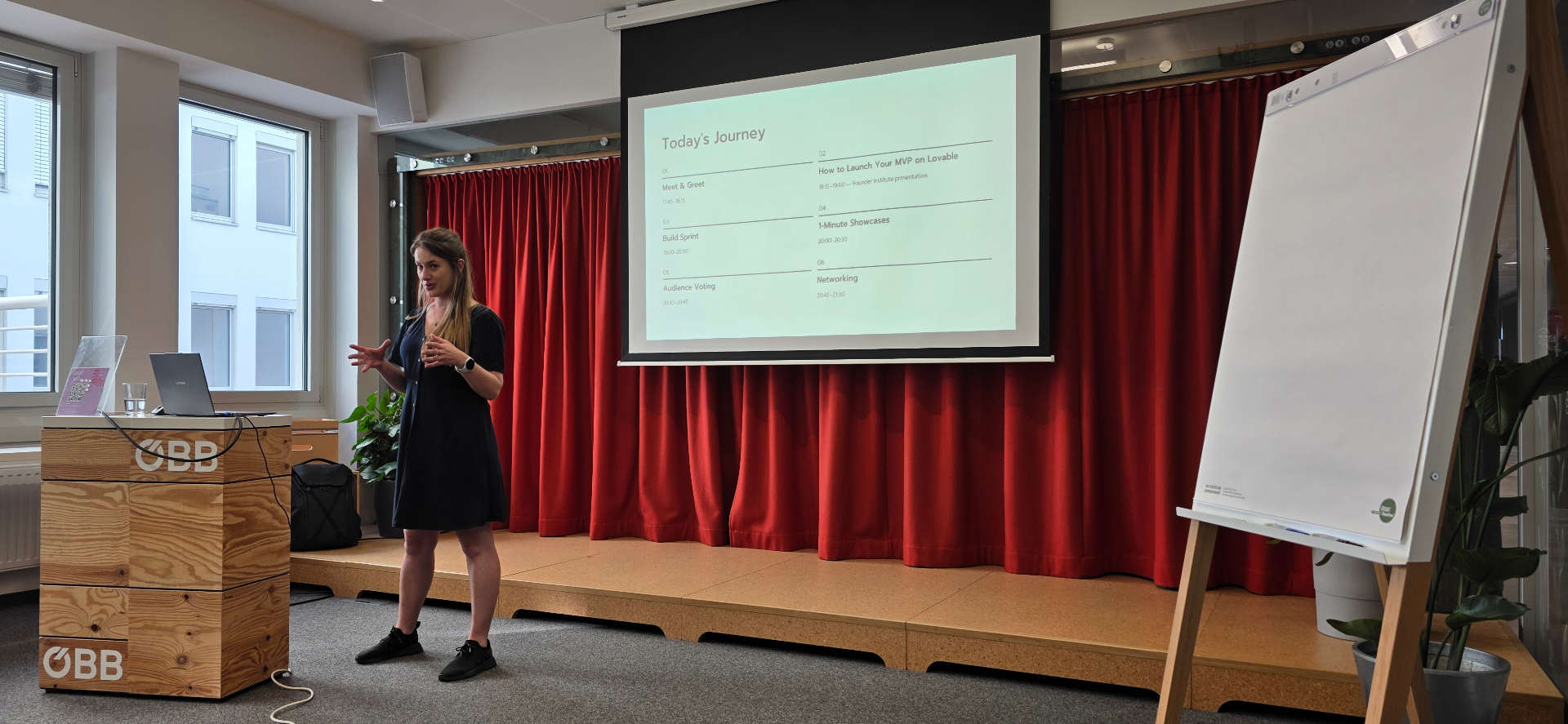
Sixteen teams took the stage to pitch web apps they had built from scratch that same evening. Most had never written a line of code. They had walked into the ÖBB Innovation Factory in Vienna an hour earlier with a laptop and an idea, and they walked out with a working product.
Ten minutes of setup, then they built
The Founder Institute Austria ran its AI-native company building approach live, hands-on, in one room. Seventy people signed up and more than 40 showed up, laptops open. The intro took about ten minutes: a walkthrough of Lovable, the prompts that work, the mistakes that waste time, and how to steer the tool toward something real. Then the room went quiet and teams started building.
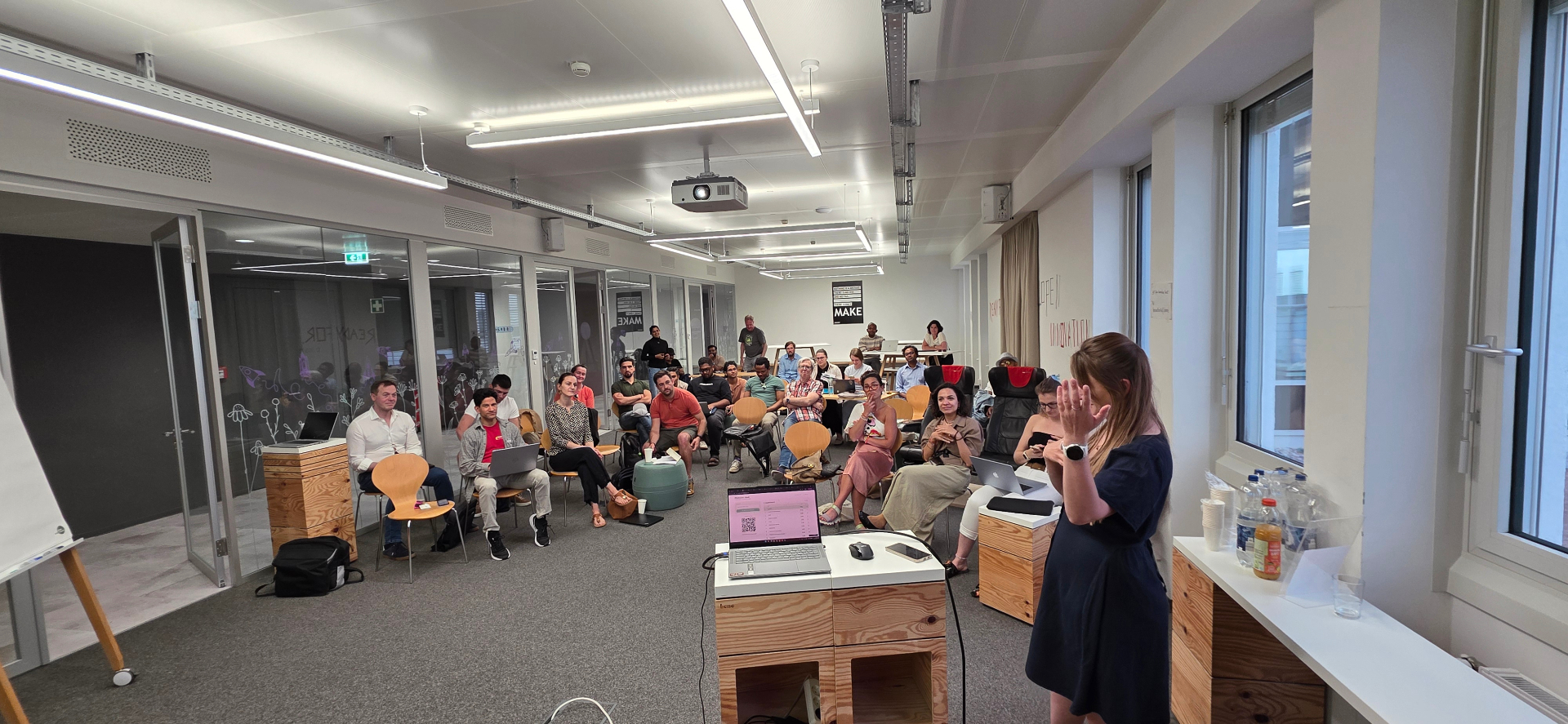
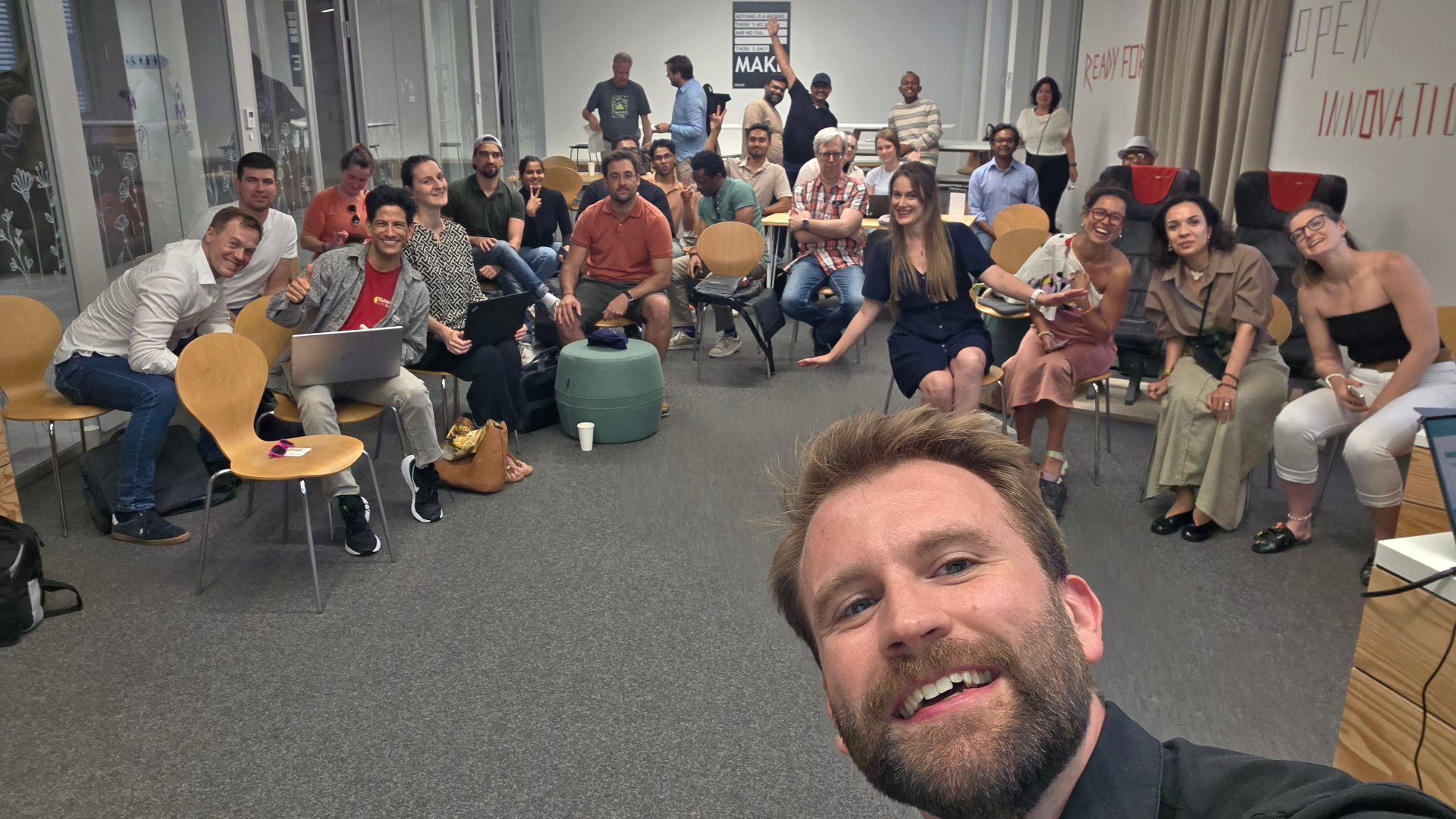
Sixty minutes later, 16 teams pitched. The apps covered sustainability, energy, travel, pets, and education. Each one was coded in natural language, built in an hour, by people who in most cases had no technical background at all.
The thesis, proven in real time
The Founder Institute is the world's largest AI-native company builder, and its core belief is direct: skills are no longer what keeps you out. Your domain expertise is an advantage. What you need is to become AI-enabled so you can act on it. The night was when that idea was made concrete.
The clearest example came from Stephan Kreiger, who built the pitch scoring tool used to judge every idea in the room. He built it live during the event, in Lovable, without writing code. The tool evaluating the apps was itself one of the apps.
What changed and what didn't
The world has no shortage of big problems. What changed is what it takes to start solving one. You no longer need a development team, a budget, or years of experience before you can put a working product in front of people. You need an idea and the willingness to build it.
Lovable supported the night with free credits for every participant, so nobody left with a prototype they then had to abandon. They left with something they could keep working on.
The build night made the method tangible: start with a focused prompt, build the smallest useful flow, then review the result with real users.
A working URL is the start, not the finish
The build night proved how quickly a concept could become testable. It did not turn every prototype into production-ready software, and that distinction is part of the method.
Keep the UI intentional
AI can produce an acceptable dashboard in minutes. A useful product still needs one primary action, a clear hierarchy and words that belong to the user's problem. Before adding more features, review the first screen and remove anything that does not help the user complete the core task. The Avoid AI slop guide shows the same review process step by step.
Check the data before real users arrive
A live URL is not proof that access rules are ready. Before connecting real customer data, keep secret keys on the server, define who can read and change each row, and test the experience with an account that should be denied. The Protect your data guide is a practical next checklist.
That is how the workshop method scales: fast first build, deliberate design review, basic security check, then another iteration. Teams can learn this in a facilitated build session or work with FutureHabits.Tech to apply it to an existing product. Explore workshops for cohorts or discuss a consulting engagement.