
By Favour Patrick
Blending Heritage, Technology, and Human Touch to Inspire the Modern Traveler
In a world where travelers seek not just destinations but meaningful experiences, ARIA Hotel Group faced a challenge shared by many premium hospitality brands: how to attract a more sophisticated audience while celebrating the authentic heritage of each property.
Their portfolio - rooted in history, culture, and craftsmanship - needed a digital experience that could communicate more than availability or amenities. It needed to tell a story.
The Challenge: Capturing Modern Sophistication Through Heritage
ARIA's hotels are located in some of the most culturally rich settings, each with its own architecture, traditions, and local artistry.
The goal was not only to showcase these elements online but to make them feel alive, transforming the website into an interactive gateway to each location's spirit.
The Solution: Five MVPs for Five Unique Experiences
To meet this challenge, the Kimolian Team, led by Eleni and Kasia, embarked on a mission to merge design, AI, and storytelling into a seamless digital strategy.
Each MVP focused on a specific pillar of the ARIA brand experience:
- Local Heritage Explorer: highlighting cultural landmarks, art, and gastronomy connected to each hotel.
- Personalized Itinerary Builder: powered by AI, helping guests create immersive, day-by-day travel plans.
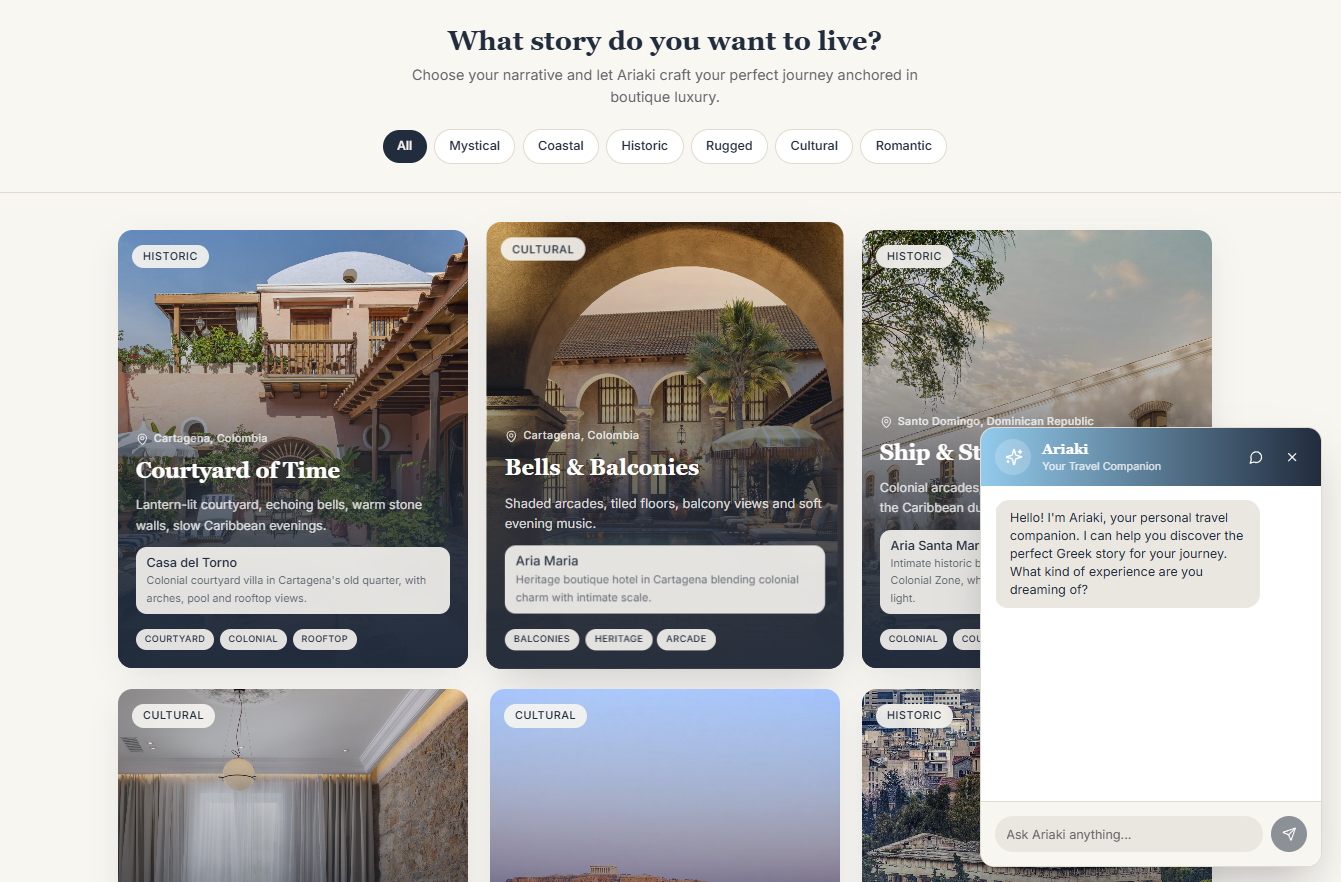
- Visual Storytelling Interface: using high-impact imagery and narratives that evoke the soul of each destination.
- Emotion-Driven Booking Flow: simplifying reservation journeys through mood-based recommendations.
Through collaboration with the Kimolian Team, ARIA is redefining what it means to explore - turning digital touchpoints into experiences that inspire, connect, and endure.
Design leadership for a curated traveller experience
Kasia led the team of designers and led QA across the work, with one clear standard: the digital experience had to feel curated for each traveller, not like a generic AI-generated interface.
AI helped accelerate exploration and implementation, but design decisions stayed human-led. The review focused on whether each property's story was clear, whether imagery and copy felt specific to the destination, and whether the next step in the journey was easy to understand.
QA against AI slop, not only against bugs
Quality assurance covered more than whether a button worked. The team reviewed the experience as a traveller would:
- Specificity: did the words and images belong to this destination, or could they describe any luxury hotel?
- Hierarchy: was the main story immediately clear, with one obvious next action?
- Consistency: did typography, spacing and interaction patterns feel intentional across the experience?
- Journey quality: could a traveller move from inspiration to a relevant itinerary without fighting the interface?
This is the same practical review described in the FutureHabits.Tech guide to avoiding generic AI-slop UI. AI can generate a first version quickly. Human design leadership is what makes the result worth trusting.
A working result: Milaki
One concrete result is Milaki, a working travel-planning MVP for Greece. It invites visitors to choose the story they want to live and co-create a journey anchored in boutique luxury. The experience shows how heritage, imagery and a clear selection flow can work together without becoming a generic booking template.
For hospitality and other experience-led products, FutureHabits.Tech combines AI product development with design leadership and QA. This can be a focused design and quality review or end-to-end support building the product together. Get in touch to discuss your product.